National Award for Smart Growth Achievement Winners
Webinars
Other Resources
Background
Small towns and rural communities throughout the Us are looking for means to strengthen their economies, provide better quality of life, and build on local assets. Many rural communities and pocket-size towns are facing challenges, including rapid growth at metropolitan edges, declining rural populations, and loss of farms and working lands.
Irksome-growing and shrinking rural areas might find that their policies are non bringing the prosperity they seek, while fast-growing rural areas at the edge of metropolitan regions face metropolitan-mode development pressures.
Smart growth strategies can help rural communities achieve their goals for growth and development while maintaining their distinctive rural character.
Planning where development should or should not go can assist a rural community encourage growth in town, where businesses tin can thrive on a walkable main street and families can live shut to their daily destinations.
Policies that protect the rural landscape help preserve open up space, protect air and water quality, provide places for recreation, and create tourist attractions that bring investments into the local economy.
Policies that back up walking, biking, and public transit assist reduce air pollution from vehicles while saving people coin.
Publications
Visit our Publications folio for a list of publications nearly rural smart growth.
EPA Resources
Full general Resources
Cool & Connected: Nine Actions for Success (2020): Specific actions small towns could take to use broadband to revitalize downtowns, create economic opportunities, and protect the surround.
Framework for Creating a Smart Growth Economic Development Strategy: A Tool for Small Cities and Towns (2016): Pace-by-stride guide to building a place-based economical development strategy. It is intended for small and mid-sized cities, particularly those that take limited population growth, areas of disinvestment, and/or a struggling economy.
Smart Growth Self-Assessment for Rural Communities (2015): Tin can help a community assess its policies, programs, and codes to make up one's mind whether they back up the blazon of development the community wants.
How Small Towns and Cities Can Use Local Assets to Rebuild Their Economies: Lessons From Successful Places (2015): Includes instance studies of small towns and cities that emphasized their existing assets and distinctive resources to build their economies.
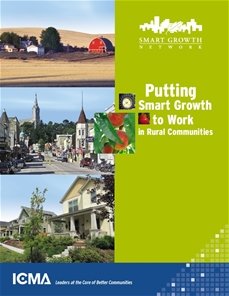
Putting Smart Growth to Work in Rural Communities, EPA and the International Metropolis/County Direction Association (2010): Focuses on smart growth strategies to meet three main goals: back up the rural landscape by keeping working lands feasible and conserving natural lands; help existing places thrive by taking care of investments and assets; and create great new places past edifice lively and enduring neighborhoods where people want to live.
Essential Smart Growth Fixes for Rural Planning, Zoning, and Development Codes (2009): Provides policy options that tin assist rural communities strengthen their economies while preserving rural character. Topics include fiscal impact analysis, commercial development, wastewater infrastructure, rural roads, and efficient development patterns.
The American Indian Ecology Office leads EPA's efforts to protect human wellness and the surroundings in federally recognized tribes.
Green Building Tools for Tribes offers resources to assistance tribes develop, implement, and enforce culturally relevant green building codes, policies, and programs.
Supporting Sustainable Rural Communities (2011): Developed past the HUD-DOT-EPA Partnership for Sustainable Communities to explore how the Partnership could contribute to more resilient economies, healthy environments, and quality of life in rural America. Includes case studies of how federal assistance has helped rural communities. It is bachelor in the EPA Annal. Click onSearch EPA Archive and type or re-create and paste the championship into the search box.
Technical Help Programs
Recreation Economic system for Rural Communities: This initiative from the U.S. Forest Service, the Northern Border Regional Commission, and EPA offers planning assistance to assistance communities develop strategies and an action plan to revitalize their Main Streets through outdoor recreation.
Cool & Continued: Under this program, USDA and EPA funded teams of experts to help members of selected communities develop strategies and an activity plan for using planned or existing broadband service to promote smart, sustainable community development.
Healthy Places for Salubrious People: This program helped communities create walkable, healthy, economically vibrant places by engaging with their wellness care facility partners such every bit community health centers (including Federally Qualified Health Centers), nonprofit hospitals, and other health care facilities.
Local Foods, Local Places: This partnership among EPA, USDA, DOT, Centers for Illness Command and Prevention, Appalachian Regional Committee, and Delta Regional Potency helps create more than livable places by promoting local food enterprises such every bit farmers' markets, food hubs, community gardens, and community kitchens on main streets in downtowns and existing neighborhoods. Local Foods, Local Places builds on the Livable Communities in Appalachia initiative, which offered technical assistance to help pocket-size towns and rural communities in Appalachia revitalize their traditional downtowns to heave the local economy and better quality of life.
Technical Aid Reports
EPA has worked with several small towns and rural places to assistance them achieve their evolution. These reports might exist helpful to other communities facing similar issues.
Local Foods, Local Places partner communities develop Community Activeness Plans that could be useful models for other communities.
Madison County, New York (2015): Tested the Smart Growth Self-Assessment for Rural Communities tool that can help communities evaluate their policies, programs, and codes.
California Strategic Growth Council (2010): Developed a guidebook that provides strategies, progress indicators, and resources to help local governments find the right combination of smart growth strategies for their communities.
The publications below are bachelor in the EPA Annal. Click on SEARCH EPA Annal and type the customs name and "smart growth" into the search box.
Waverly, Iowa (2011): Created policy options for green infrastructure strategies and housing and infill policies that could be incorporated into the city'south comprehensive programme and development regulations. Waverly's efforts are also described in a case study in the HUD-DOT-EPA Partnership for Sustainable Communities' Supporting Sustainable Rural Communities.
Cedar Rapids, Iowa (2010): Assessed how land use policies could be changed to create incentives for infill development and sustainable growth.
Sussex County, Delaware (2009): Presented light-green street blueprint options to manage stormwater runoff and improve safety and aesthetics.
Marquette, Michigan (2008): Adult a form-based code to help guide the urban center in its decisions about development in the Downtown Waterfront District.
Pamlico County, North Carolina (2008): Examined smart growth approaches to improve a rural highway corridor.
Driggs and Victor, Idaho (2007): Identified barriers to infill evolution.
Laconia, New Hampshire (2007): Engaged the public in adopting a new master plan designed to protect water resources, create walkable neighborhoods, and strengthen neighborhood centers.
Porter County, Indiana (2007): Developed traditional neighborhood development design guidelines to supplement the county's Unified Development Ordinance for land evolution.
Wells, Maine (2007): Explored different stormwater management, transportation, and parking strategies, along with building and land use designs for the Route 109 corridor and Wells Corner central area.
Aquidneck Island, Rhode Isle (2006): Developed approaches for mixed-use zoning standards, design guidelines, and review processes in three communities.
Taos, New Mexico (2006): Explored options to help make development forth State Highway 68, the Paseo del Pueblo Sur commercial corridor, more than attractive and economically stronger.
McCall, Idaho (2005): Created a vision for evolution at two sites along the East-West Loop Route.
National Award for Smart Growth Achievement Winners
Charles Metropolis Riverfront Park – Charles City, Iowa (2013): After decades of fighting against the often-flooded Cedar River, Charles City transformed the land adjacent to the river into a park that has go the recreational heart of the city. Video
The Cooperative Building – Brattleboro, Vermont (2012): A new, free energy-efficient, multi-story edifice with a food co-op, affordable apartments, and innovative, money-saving ecology features has contributed to the vibrancy of Brattleboro's Main Street while promoting good for you living. Video
Maroney Commons – Howard, South Dakota (2011): With just over 850 residents, Howard is reimagining what information technology means to be rural with Maroney Commons, a mixed-use, green complex with a hotel, a conference center, a eating house, and offices that will help rural residents learn about green jobs and technology. Video
Gateway 1 Corridor Action Plan – Maine (2010): The Gateway 1 Corridor Activity Plan covers a 100-mile stretch along U.S. Route 1 in Maine. 20 towns worked together to preserve the economic system, environs, and quality of life along this regionally significant corridor. Video
Lancaster County Planning Commission – Lancaster County, Pennsylvania (2009): The Lancaster County Planning Committee established a regional, comprehensive growth direction plan that protects farmland and celebrated landscapes by directing development to established towns and cities in the county. Video
Vermont Housing and Conservation Board – Country of Vermont (2007): The Vermont Housing and Conservation Lath used more than $150 one thousand thousand in private disinterestedness raised through low-income housing and historic rehabilitation tax credits to create mixed-use, mixed-income developments located near existing transit systems.
Balanced Growth Through Downtown Revitalization – Town of Barnstable, Massachusetts (2007): Public infinite and streetscape improvements have helped revitalize Hyannis, a village within the town of Barnstable. The redevelopment program has reconnected residents to the waterfront and downtown by creating pedestrian-friendly walkways. Cycle and public transit routes are reconnected to main streets and residential neighborhoods while new residential developments are linked to natural areas and wetlands.
Winooski Downtown Redevelopment Project – Winooski, Vermont (2006): The Winooski Downtown Redevelopment Project revitalized this pocket-sized town by preserving or restoring almost 100 acres of natural habitat, returning vacant backdrop to productive apply, creating several neighborhood parks, and building the pedestrian-friendly RiverWalk.
Gilbert & Bennett Wire Manufacturing plant Redevelopment – Redding, Connecticut (2005): Over 1,000 people participated in workshops that helped define the cleanup plan, historic preservation guidelines, and principal programme for the town's redevelopment.
Boondocks of Davidson Planning Section – Davidson, Northward Carolina (2004): The small community of Davidson created salubrious and vibrant neighborhoods in a historic setting. The boondocks revitalized its existing buildings, and its new neighborhoods incorporated a variety of lot sizes and housing types and neighborhood parks within a v-minute walk.
Boondocks of Breckenridge Planning Department - Breckenridge, Colorado (2002): The Wellington Neighborhood in Breckenridge provides affordable and market-rate housing on a site that was once dredge-mined. The projection recycled land, created housing for working families, provided a free transit shuttle to the nearby downtown, and helped the region avoid "mount sprawl."
Webinars and Videos
Visit our webinars, videos, and podcasts page for data about smart growth-related webinars and videos on modest towns and rural communities.
Other Resources
USDA – Rural Development offers technical assistance and data to help agricultural producers and cooperatives become started and operate more effectively.
National Association of Evolution Organizations and its members promote regional strategies, partnerships, and solutions to strengthen economical competitiveness and quality of life in America's communities.
Connecting the DOTS – A Guide for Connecting with Your Department of Transportation (2011): Guidebook for artistic problem-solving, building stronger land and local partnerships, and understanding the opportunities that transportation and economical development projects bring.
Regional Approaches to Sustainable Development(2011): Highlights opportunities for regional development organizations to undertake sustainable growth initiatives. Case studies feature California, Michigan, North Carolina, and Utah.
Appalachian Regional Commission is a regional economical development bureau that is a partnership of federal, state, and local government. Information technology is equanimous of the governors of the thirteen Appalachian states and a federal co-chair appointed by the president.
Rural Policy Inquiry Constitute provides data on the challenges and opportunities facing rural America.
0 Response to "Living in a Northern Small Town America Study Peer Review"
Post a Comment